
Social skills are the everyday tools kids use to connect with others. Things like communicating needs, joining play, taking turns, noticing facial expressions, and building friendships. For some children, these skills develop naturally through observation and practice. For others, social interaction can feel confusing, unpredictable, or even stressful.
This is especially common for children with Autism Spectrum Disorder (ASD), where social communication differences are part of the diagnostic picture. But it is not limited to autism. Many kids with speech delays, ADHD, anxiety, or developmental delays can also benefit from structured, supportive social skill teaching.
In ABA therapy, we focus on social skills because they directly impact daily life. Social skills affect school success, family routines, friendships, and a child’s ability to feel confident in their world.
Just as important, we want to set the tone clearly: ABA should not “force” a child to be social. At Moving Mountains ABA, we use a modern, assent-based approach. That means we prioritize a child’s happiness and willingness to participate, and we strictly avoid aversive or punishment-based strategies. We meet kids where they are, whether that is at home, at school, or out in the community, and we build practical skills that matter in real life.
In this article, we will walk through how we teach social skills using ABA, including assessment, goal-setting, the core strategies you might see in sessions, and how we help those skills show up outside therapy.
Why social skills can be hard for some kids (and why ABA focuses on them)
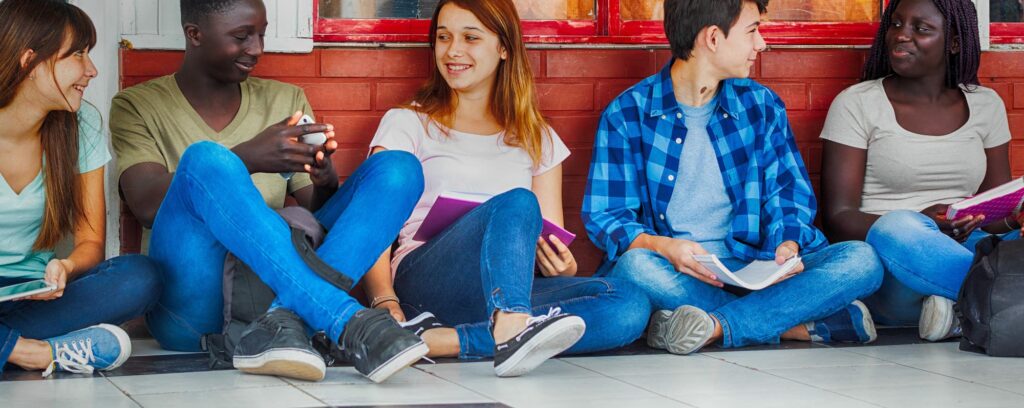
Social situations require a lot of “hidden” skills happening at once. A child may need to:
- Understand what someone else means (even when they do not say it directly)
- Notice body language, tone of voice, and facial expressions
- Wait, take turns, and handle losing or disappointment
- Join play without taking over or withdrawing
- Shift topics and respond to questions
- Cope with unpredictable moments, like a peer changing the rules of a game
For many kids, those demands are manageable. For others, the social world can feel like a fast-moving puzzle.
ABA helps by making social learning more clear, more structured, and more supportive. We break complex skills into smaller pieces, teach them step-by-step, and practice them in the places where kids actually need them.
How we figure out which social skills to teach first (our ABA assessment process)
Before we teach anything, we work to understand your child’s current skills, their needs, and what matters most to your family. Our assessment process typically includes:
- Caregiver interviews to learn your priorities, concerns, routines, and what “a good day” looks like at home
- Direct observation of your child during play, transitions, and daily routines
- Skill probes that help us see what your child can do independently versus with support
- Review of challenging moments, such as difficulty with waiting, group activities, sharing, or tolerating “no”
From there, we identify meaningful starting points. Common early social targets include:
- Requesting help or a break
- Greeting familiar adults or peers
- Responding to their name
- Joint attention (sharing focus on an object or activity)
- Sharing interests (showing, pointing, commenting)
- Waiting and turn-taking
- Flexible play (tolerating changes in routines or rules)
- Coping with disappointment, including hearing “no”
We also define what we will measure so progress is clear. Depending on the goal, we might track:
- Frequency (how often the skill happens)
- Duration (how long the interaction lasts)
- Independence level (how much prompting is needed)
- Where and with whom it happens (generalization across people and places)
And we always center caregiver priorities. Goals should match your family values, your child’s school needs, and what life looks like in your community across New Hampshire.
Once we know the baseline, we build a customized ABA program designed for real life, not just the therapy hour.
Turning assessments into a plan: SMART goals that actually translate to real life
We build goals that are clear and measurable so you can actually tell if they are improving. In ABA, we often use SMART goals, meaning they are:
- Specific: exactly what the skill is
- Measurable: you can track it
- Achievable: realistic for your child right now
- Relevant: meaningful for daily life
- Time-bound: progress is reviewed over a set period
Here are a few examples of SMART social goals (these will vary by age and developmental level):
- Greeting: “Within 12 weeks, when entering a familiar setting (home, school, therapy), our child will independently say or sign ‘hi’ to a familiar person in 4 out of 5 opportunities across two consecutive weeks.”
- Turn-taking: “Within 16 weeks, during a simple turn-taking game, our child will take turns for at least 5 exchanges with no more than one prompt in 3 out of 4 sessions.”
- Initiating a request: “Within 10 weeks, during play, our child will independently request an item or action using their current communication system (word, sign, AAC) at least 5 times per session across 3 consecutive sessions.”
To make social goals teachable, we often use task analysis, which means breaking a skill into steps. For example, “joining play” might include:
- Move closer to the activity
- Watch what the other child is doing
- Use a simple entry phrase (“Can I play?” or “My turn?”)
- Wait for a response
- Take a turn or follow the group rule
We also decide how to teach the skill based on your child and the situation. Some skills benefit from structured practice (often called Discrete Trial Training, or DTT). Other skills are best taught in the moment during real routines (Natural Environment Training, or NET). Most kids benefit from a blend.
Goals are not set once and forgotten. We review them regularly and update them as your child grows.
The core ABA strategies we use to teach social skills (what it looks like in sessions)
ABA uses evidence-based teaching strategies to build skills step-by-step, then practice them in the real world. In sessions, you might see tools like:
- Positive reinforcement
- Modeling and video modeling
- Prompting and prompt fading
- Role-playing
- Social stories
- Scripted conversations
- Peer-mediated practice
We also pay close attention to setting. While some providers work primarily in clinics, at Moving Mountains ABA we specialize in in-home and community-based support. That matters because social skills are most useful when they show up where life happens: in the living room, at the playground, in the grocery store, and during real family routines.
There is no single “best” strategy. What works depends on your child’s learning style, motivation, language level, sensory needs, and the specific social demand.
Positive reinforcement: how we make social practice motivating (without bribing)
Positive reinforcement means adding something your child values after a skill so the skill is more likely to happen again.
Reinforcement can look like:
- Specific praise (“Nice waiting!”)
- A preferred toy or activity
- Tokens or points leading to a bigger reward
- Choice time
- Natural social reinforcement (laughter, attention, shared fun)
Example during turn-taking:
“Great job waiting. Now it’s your turn.”
Example during cooperative play:
After your child takes one flexible play turn, they earn a point toward a preferred activity.
We also plan to fade reinforcement over time. Early on, a child might need more tangible reinforcement to build the habit. As the skill becomes stronger, we shift toward more natural outcomes, like the fun of the game, attention from peers, or the satisfaction of being understood.
In an assent-based model, reinforcement is not about control. It is about making learning feel safe, worthwhile, and motivating.
Modeling and video modeling: showing the skill before expecting the skill
Many kids learn best when they can see what to do first.
Modeling means we demonstrate a skill and then help your child practice it. This can include:
- Greeting
- Asking to play
- Sharing
- Coping with losing
- Using an appropriate voice volume
- Standing at an appropriate distance
Video modeling uses short videos to show the skill in a clear, repeatable way. This can be especially helpful for visual learners and for subtle social cues, like facial expressions, tone of voice, and body language.
We might use pictures and videos to practice identifying emotions and pairing them with real-life situations, then move into practice during play and daily routines.
Prompting (and fading): helping at the right moment, then stepping back
Prompts are supports we use to help a child succeed in the moment. Prompt types may include:
- Verbal prompts (“Say ‘my turn’”)
- Gestural prompts (pointing to a peer or item)
- Visual prompts (cue cards like “my turn/your turn”)
- Positional prompts (placing the correct choice closer)
- Physical prompts (only when appropriate and always with consent and care)
Example: A visual cue card that says “Hi” by the front door to support greetings.
Example: A simple conversation starter card (“Can I play?” “What are you playing?”).
Prompting only works well if we fade it. Prompt fading means we gradually reduce help so your child becomes more independent.
Sometimes we use an “errorless” approach early on, setting things up so your child gets it right and feels successful. Other times, we allow small mistakes when it helps learning. The decision depends on the child, the skill, and the moment.
We also coach caregivers on prompts that feel natural at home, so it does not turn into scripted therapy talk. Simple, consistent cues usually work best.
Role-playing, social stories, and scripted conversations: practicing before it counts
Some social moments are too hard to learn “live.” Role-play lets kids practice without pressure.
We might role-play:
- Joining a game
- Asking for help
- Handling teasing
- Ordering at a café
- Meeting someone new
- What to do when plans change
Social stories are short, personalized narratives that explain expectations and perspectives. They can help a child understand what might happen, what others might be thinking or feeling, and what options the child has.
Scripted conversations provide simple starters and responses for common situations. We use scripts as a support, then gradually move toward flexible language as the child gains confidence.
We keep it fun. Many social skills are taught through games, pretend play, and short practice bursts so kids do not feel put on the spot.
Discrete Trial Training (DTT) vs Natural Environment Training (NET): when we use each
DTT is structured practice. It includes a clear instruction, a response, and immediate feedback. It is helpful when a child needs repetition and clarity.
NET is teaching within real activities and routines. It focuses on functional use, like practicing turn-taking during a board game or greeting a neighbor during a walk.
Examples:
- DTT: labeling facial expressions from pictures or videos
- NET: taking turns naturally during play, asking to join, or responding when someone says “hi”
We often blend both. DTT can help build the skill, and NET helps the skill show up in real life. We collect data in both formats so we can see what is improving and where support is still needed.
Peer-mediated interventions: learning with (and from) other kids
Social skills grow faster when kids have real opportunities to practice with peers.
Peer-mediated interventions might involve siblings, classmates, cousins, or carefully chosen peer partners. We might support:
- Coached playdates with a clear plan
- Sibling turn-taking games
- Cooperative routines (building, cooking, simple team tasks)
- Group play structures with shared rules
We also teach peers simple strategies, like how to wait, how to offer a choice, and how to reinforce attempts kindly.
We prioritize comfort and positive experiences. If a situation is too overwhelming, we scale it back and rebuild slowly so social practice stays safe and successful.
What social skills we commonly target (real examples of skills that matter day-to-day)
Every plan is individualized, but common social skill targets often fall into a few clusters.
Communication basics
- Requesting items, help, or a break
- Commenting and sharing interests
- Asking and answering questions
- Conversational turn-taking (even very short back-and-forth)
Social understanding
- Recognizing facial expressions and emotions
- Noticing tone of voice
- Personal space and body boundaries
- Reading basic body language
- Perspective-taking at the child’s level (understanding that others have different thoughts and feelings)
Self-advocacy and regulation in social moments
- Asking for space or support
- Coping with losing
- Waiting without escalating
- Handling frustration without aggression or shutdown
- Repairing social moments (“Can I try again?” “Sorry.”)
How we help kids use social skills outside therapy: generalization in home and community
A skill is only truly useful if it shows up with different people, in different places, and in real routines. In ABA, this is called generalization, and it is one of the most important parts of social skills work.
In-home sessions
In-home support lets us practice skills where your child is most comfortable and where your routines naturally happen. That might include:
- Greeting family members at arrival
- Sharing and turn-taking with siblings
- Transitioning from screens to dinner
- Playing with familiar toys in flexible ways
- Practicing short back-and-forth conversations during daily routines
Community sessions
Community sessions give kids real practice with real stakes, but done gradually and with supports. This might include:
- Taking turns at the playground
- Waiting in line at a store
- Ordering a snack at a café
- Greeting familiar community helpers
- Handling unexpected changes (a closed park, a long wait, a noisy environment)
We often use proactive supports like visuals, priming before outings, and role-play beforehand so your child knows what to expect. When appropriate, we also coordinate with schools and other providers so the same cues and expectations are used across settings.
How we track progress (and what improvement usually looks like)
We track progress so decisions are based on real information, not guesswork. ABA data collection can be simple and practical. We might track:
- How independent the skill is
- How often it happens
- How accurate it is
- How much prompting is needed
Meaningful progress often looks like:
- Fewer prompts needed over time
- More spontaneous initiations (your child starts the interaction)
- Longer back-and-forth interactions
- Better tolerance for waiting or losing
- Smoother playdates and fewer escalations during social routines
If progress stalls, we adjust. We look at motivation, whether the steps are too big, whether prompts need changing, and whether reinforcement still fits your child.
Caregiver feedback is a key part of progress monitoring. What you see at home matters just as much as what we see in session.
Timelines vary. Social skills build gradually, and consistency across environments can make a big difference.
What families can do at home to support ABA social goals (simple, doable steps)
You do not need to run “therapy” at home to support social growth. Small, consistent practice goes a long way.
- Use consistent language: keep cues short and familiar (“First wait, then turn”).
- Practice in low-pressure moments: quick games, short routines, simple choices.
- Reinforce effort, not perfection: notice attempts, even if they are small.
- Model and narrate: show how to greet, how to repair, and how to stay flexible.
- Prime before hard moments: quick reminders before outings, a short social story before a new event, or a short role-play before a playdate.
When we coach caregivers, we focus on strategies that fit your household, not unrealistic expectations.
How we support families across New Hampshire (and what it’s like to work with us)
We provide in-home and community-based Applied Behavior Analysis (ABA) therapy for children and families across New Hampshire. Our goal is to build skills that make daily life easier and more connected, while respecting each child as a whole person.
Here is what families can expect when working with us:
- Intake and getting to know your family
- Assessment to understand strengths, needs, and priorities
- Collaborative goal-setting based on what matters in your routines
- A consistent session schedule that fits family life
- Caregiver coaching so progress continues between sessions
- Regular progress reviews and plan updates as skills grow
Our BCBAs design and oversee individualized treatment plans. Our RBTs implement sessions with ongoing supervision and support. Throughout the process, we focus on compassion, collaboration, and care.
Most importantly, we use an assent-based approach. We prioritize your child’s willingness, comfort, and emotional safety. We partner with parents to help children with autism navigate their world with confidence and independence.
Let’s build social skills that stick (next steps)
At Moving Mountains ABA, we teach social skills through the principles of Applied Behavior Analysis (ABA) by identifying what matters most, setting clear goals, using evidence-based strategies such as reinforcement, modeling, prompting, role-play, social stories, and peer practice. Then we practice those skills across real environments to ensure they truly carry over into daily life.
If you are looking for in-home or community-based ABA support in New Hampshire, we would love to help you explore what services could look like for your child and your family. We invite you to reach out to us to schedule a consultation, ask questions, and discuss social goals that feel practical, respectful, and achievable.
We also understand that navigating the world of insurance can be daunting. That’s why we offer assistance in understanding your insurance coverage for ABA therapy, ensuring you have the information you need about benefits and next steps.
FAQ: ABA and social skills
Does ABA teach kids to “act normal” socially?
No. Our goal is not to change who a child is. We focus on teaching functional skills that help a child communicate needs, participate in daily life, and build relationships in ways that feel safe and meaningful to them.
What if my child does not want to interact with others?
We respect that. With an assent-based approach, we do not force social interaction. We build comfort first, strengthen communication, and create low-pressure opportunities where social engagement is more likely to happen naturally.
How long does it take to see improvement in social skills?
It depends on the child, the goals, and consistency across environments. Many families notice small wins first (more tolerance, more attempts, fewer prompts), followed by bigger changes as practice adds up.
Will my child practice social skills with other kids?
When it is appropriate and comfortable, yes. We may include siblings, peers, or supported play opportunities to help skills generalize. We do this carefully to keep experiences positive and not overwhelming.
Can ABA help with friendships?
ABA can teach the building blocks of friendship, like initiating, responding, sharing interests, and flexible play. Friendships also depend on the right environment and peer match, so we focus on skills and real opportunities that make connection more likely.
Do you coordinate with schools?
When appropriate and with caregiver consent, we can collaborate with schools and other providers so strategies are consistent across settings and your child gets more unified support.
What makes Moving Mountains ABA different?
We specialize in in-home and community-based services across New Hampshire, and we use a modern, assent-based approach that prioritizes the child’s happiness and willingness to participate. We focus on practical skills for real life and partner closely with parents every step of the way.
FAQs (Frequently Asked Questions)
What are social skills and why can they be challenging for some kids, especially those with Autism Spectrum Disorder (ASD)?
Social skills include communication, play, turn-taking, understanding social cues, and building friendships. Kids with Autism Spectrum Disorder (ASD) often face challenges in these areas due to difficulties in social communication and interaction. Applied Behavior Analysis (ABA) therapy focuses on teaching these practical and functional social skills to support children with ASD and others experiencing social or communication delays.
How does ABA therapy assess which social skills to teach first?
ABA therapy begins with a comprehensive assessment involving caregiver interviews, direct observation, skill probes, and reviewing daily routines and challenging moments. Common starting points include requesting help, greeting others, joint attention, sharing interests, tolerating ‘no,’ flexible play, and waiting or turn-taking. This assessment helps measure behaviors by frequency, duration, and independence level to set meaningful goals aligned with family values and community life.
What are SMART goals in ABA therapy for social skills, and can you provide examples?
SMART goals are Specific, Measurable, Achievable, Relevant, and Time-bound objectives that translate directly to real-life improvements. Examples of SMART social goals include greeting peers appropriately, taking turns during games, initiating requests effectively, responding consistently to their name, and maintaining brief conversations. These goals are broken down into teachable steps through task analysis and tailored teaching formats like discrete trial training or natural environment training based on the child’s needs.
What core ABA strategies are used to teach social skills during therapy sessions?
Core ABA strategies include positive reinforcement to motivate skill practice without bribing; modeling and video modeling to demonstrate desired behaviors; prompting to support skill acquisition; role-playing; using social stories; scripted conversations; and peer-mediated interventions. These techniques are applied across settings such as clinic sessions (if applicable), in-home environments, and community settings to promote generalization of skills.
How does positive reinforcement work in ABA therapy for teaching social skills without being considered bribery?
Positive reinforcement involves adding something valuable immediately after a desired behavior to increase its likelihood. In ABA therapy, this includes praise, access to favorite toys or activities, tokens, choice time, and natural social rewards like peer attention or success experiences. Reinforcers are individualized ethically to support learning rather than control behavior. Over time, tangible rewards are faded out in favor of natural reinforcers that maintain motivation.
Why is generalization important in ABA therapy for social skills and how is it supported?
Generalization ensures that children apply learned social skills across different people, places, and situations beyond therapy sessions. ABA supports generalization by practicing skills in various settings such as at home and in the community through in-home sessions and community-based support. Techniques like peer-mediated interventions and role-playing help children transfer their abilities into real-life contexts effectively.
Ready to help your child climb their social mountain? Contact us today to learn more about our individualized, in-home social skills programs.
Disclaimer: The information provided in this blog is for informational purposes only and is not intended as medical advice, diagnosis, or treatment. Always seek the advice of your physician or a qualified healthcare provider with any questions you may have regarding a medical condition or treatment plan. Never disregard professional medical advice or delay in seeking care because of something you have read on this website. Moving Mountains ABA does not provide medical or clinical services directly through its website. If you are experiencing a medical emergency, please call 911 or seek immediate medical attention.